


The information provided by Topture is for general informational purposes only and is not intended as medical advice. Always consult with a licensed healthcare provider before making any changes to your health routines or pain management strategies. Individual results from using our products may vary. No specific outcomes are guaranteed, and none of the content should be interpreted as a promise of immediate or permanent results. Content on this site is subject to change without notice. Topture is not responsible for any discrepancies, outdated information, or formatting issues that may occur during display across different devices or browsers.
Choosing between a barrel sauna and a square sauna is one of the most important decisions you'll make when investing in a home sauna. While both styles deliver the authentic sauna experience you're looking for, they each offer distinct advantages that cater to different needs, spaces, and preferences.
The barrel sauna has become iconic for its striking cylindrical design and energy-efficient heating, making it a favorite for outdoor installations. Meanwhile, square saunas (also called cabin-style saunas) offer more interior space and installation versatility, working beautifully both indoors and outdoors.
In this comprehensive guide, we'll explore everything you need to know about barrel sauna vs square sauna to help you make the right choice for your wellness journey.
| Feature | Barrel Sauna | Square (Cabin) Sauna |
|---|---|---|
| Best For | Outdoor spaces, heating efficiency, rustic charm | Indoor use, corner placement, maximizing interior space |
| Heating Efficiency | Higher. Heats 15-30% faster due to less volume. | Standard. More air volume to heat. |
| Interior Space | Cozy. Reduced headroom on sides. | More Spacious. Full, consistent headroom. |
| Installation | Primarily Outdoor. Needs 360° clearance. | Indoor & Outdoor. Fits in corners, against walls. |
| Heater Type | Best for Traditional (Electric/Wood) | Excellent for both Traditional and Infrared |
Before diving into detailed comparisons, it's helpful to understand what defines each sauna style and why these shapes matter more than you might think.
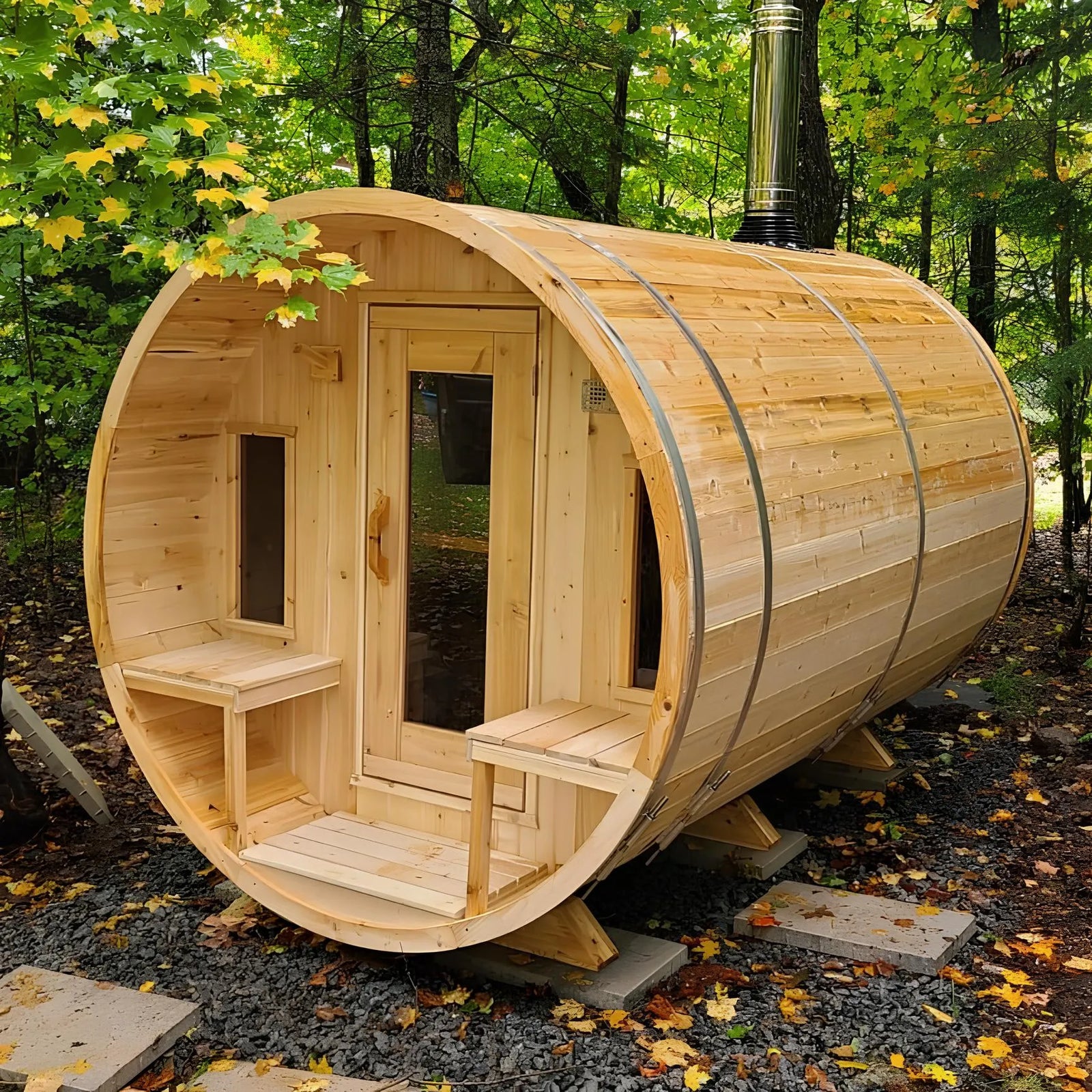
A barrel sauna features a distinctive cylindrical shape that's instantly recognizable in any backyard. This rounded design isn't just about aesthetics—it serves several functional purposes that affect how the sauna performs.
The curved walls create natural air circulation patterns that promote even heat distribution throughout the interior. Because the curved surface has no corners where heat can escape or become trapped, the warmth circulates more efficiently. This cylindrical shape also means there's less interior volume to heat compared to a square structure of similar floor space, allowing the sauna to reach optimal temperature faster.
Another practical advantage of the barrel design is how effectively it sheds water. Rain and snow slide off the curved roof naturally, which helps protect the wood and extend the lifespan of your sauna when installed outdoors. This makes barrel saunas particularly well-suited for regions with significant precipitation.
However, the rounded walls do create some trade-offs. The curved ceiling reduces headroom, especially along the sides of the sauna. Most barrel saunas work best with traditional electric or wood-burning heaters, as the curved interior makes infrared panel installation more challenging.
Square saunas, sometimes called cabin-style or box saunas, feature the traditional rectangular construction you'd expect from an indoor room. This conventional shape creates a more spacious feeling inside with full headroom from wall to wall.
The straight walls and ceiling of a square sauna allow for more flexible interior configurations. You can easily install multi-level bench seating, position windows wherever you prefer, and even incorporate infrared heating panels along the flat walls. This versatility makes square saunas adaptable to various installation scenarios, from spare bedrooms to outdoor decks.
Square saunas can be built to fit compact spaces more efficiently than barrel designs. A small square sauna might measure just 3' x 3', tucking neatly into a corner or closet. The rectangular footprint also makes it easier to place a square sauna against existing walls or integrate it into your home's architecture.
The trade-off comes in heating efficiency. The angular construction creates more interior volume to heat, and corners can sometimes create small pockets where heat distribution isn't as uniform. This typically means slightly longer heat-up times and potentially higher energy costs compared to a similarly-sized barrel sauna.
One of your first considerations should be where you plan to install your sauna and how much space you have available.
Barrel saunas require more floor space than you might initially expect. While they may be shorter in height, their circular cross-section means they need clearance on all sides. A barrel sauna can't be pushed up against a wall or tucked into a corner—it needs to sit freely in an open area. This makes them primarily suited for outdoor installations where you have a patio, deck, or dedicated area of your yard available.
Square saunas offer significantly more flexibility in placement. Their rectangular shape allows them to fit against walls, into corners, or even in narrow spaces that wouldn't accommodate a barrel design. This space efficiency makes square saunas the go-to choice for indoor installations, whether you're converting a spare bedroom, finishing a basement corner, or carving out space in a large bathroom.
Most barrel saunas you'll find are designed specifically for outdoor use. Their wider footprint, traditional heating requirements, and rustic aesthetic all lend themselves to backyard placement. If you're envisioning a sauna experience that involves stepping outside, perhaps year-round cold plunges or simply enjoying nature between sessions, a barrel sauna creates that outdoor sanctuary beautifully.
Square saunas excel at indoor installations. Their compact footprint and ability to use infrared heating (which requires less ventilation than traditional heaters) makes them practical for interior spaces. That said, square saunas work perfectly well outdoors too, giving you the best of both worlds—you can choose based on your available space rather than being limited by the sauna style.
Explore our selection of traditional saunas and outdoor saunas to see both barrel and square options for your space.
The running costs of your sauna are just as important as the purchase price, and this is where the shape makes a significant difference.
The cylindrical design of a barrel sauna creates a natural advantage in heating efficiency. The curved walls promote continuous air circulation, with hot air naturally flowing along the rounded surface without getting trapped in corners. This means the heat distributes more evenly throughout the space without hot or cold spots.
Additionally, the barrel shape encloses less interior volume than a square sauna with a similar floor area. There's simply less air to heat, which means your heater doesn't have to work as hard to reach and maintain your target temperature. That is why a barrel generally heats up faster than a square sauna with the same heater.
This efficiency translates directly to lower energy costs over time. If you use your sauna regularly, those energy savings add up month after month, year after year.
Square saunas take longer to reach optimal temperature due to their larger interior volume and angular construction. However, good insulation can help square saunas retain heat effectively once they're up to temperature.
One advantage square saunas offer is compatibility with infrared heating technology. Unlike traditional heaters that warm the air, infrared saunas use panels to directly heat your body. These infrared saunas operate at lower temperatures (typically 120-140°F compared to 150-195°F for traditional saunas) and can be more energy-efficient than traditional heating methods, potentially offsetting the shape disadvantage.
The heating method you choose will significantly impact your operating costs. A square sauna with infrared heating might ultimately cost less to run than a barrel sauna with a less efficient traditional heater, so consider the complete package rather than shape alone.
The shape of your sauna dramatically affects how comfortable you'll feel inside, especially during longer sessions.
This is where square saunas have a clear advantage. With straight walls and a flat ceiling, square saunas typically offer 6-7 feet of headroom throughout the entire interior. You can stand comfortably and move around freely.
Barrel saunas present more limitations. While you'll have adequate headroom in the center of the barrel, the curved walls mean less vertical space as you move toward the sides. Taller users may need to sit more toward the middle of the bench, and standing up requires being mindful of the curved ceiling. Some people find this cozy; others feel it's restrictive.
Square saunas offer more flexibility for bench configuration. The straight walls allow for multi-level benching, giving users the option to sit higher (where it's hotter) or lower (where it's cooler). You can also arrange benches in L-shapes or along multiple walls, maximizing capacity in larger models.
Barrel saunas typically feature benches that follow the curved walls, usually in a single level or simple two-tier arrangement. While this works perfectly well, you have less flexibility to customize the seating layout. The curved bench design does create a distinctive aesthetic, even if it's less versatile.
Check out our range of 1-person saunas through 6-person saunas to find the capacity that matches your needs in either style.
Your sauna should complement your space and reflect your personal style, making the aesthetic dimension an important consideration.
Barrel saunas make a bold visual statement. The cylindrical shape evokes traditional European sauna culture and creates an unmistakable focal point in any outdoor space. If you appreciate rustic, naturalistic design or want your sauna to become a conversation-starting feature of your backyard, a barrel sauna delivers that distinctive character.
The rounded shape also has a sculptural quality that looks beautiful from every angle. Whether you place it on a stone patio, wooden deck, or directly on gravel or grass, a barrel sauna integrates beautifully with natural outdoor environments. Many feature charred wood exteriors or natural cedar finishes that weather gracefully over time, developing a rich patina that enhances their rustic appeal.
Square saunas offer more design flexibility and can adapt to various aesthetic preferences. Their traditional construction allows for customization options like larger windows, glass doors, different wood tones, and various exterior finishes. This makes them easier to match with existing architecture, whether you're installing indoors or outdoors.
For indoor installations, square saunas can be designed to look like a natural extension of your home rather than an obvious addition. You can select wood species and finishes that coordinate with your interior design, add windows that align with your home's style, and even incorporate custom lighting for a spa-like ambiance.
Outdoors, square saunas can be built to complement your home's exterior architecture, creating a cohesive look between your house and backyard structures. While they may not have the same iconic presence as a barrel sauna, their understated design can be an advantage if you prefer a more subtle aesthetic.
Understanding the full financial picture helps you make a decision you'll be happy with for years to come.
Generally speaking, square saunas have a lower entry price point than barrel saunas. Basic square sauna models can start around $3,000, making them accessible for budget-conscious buyers. Barrel saunas typically start at slightly higher price points, often beginning around $3,500-$4,000 for entry-level models.
However, pricing varies significantly based on size, wood quality, heater type, and features. A premium square sauna with high-end materials and features may cost considerably more than a basic barrel sauna. The key is comparing similar quality levels rather than just shapes.
Browse our complete collection of saunas to compare specific models and pricing across both styles.
While square saunas may cost less upfront, barrel saunas often prove more economical over the long term due to their energy efficiency. If you use your sauna several times per week, the faster heating times and lower energy consumption of a barrel sauna can use less electricity than a similarly-sized square sauna with traditional heating — the saving is the heater's kW × the heat-up time you save × your local rate per kWh.
That said, a square sauna equipped with efficient infrared heating may have comparable or even lower operating costs than a barrel sauna with a less efficient traditional heater. The specific models you're comparing matter more than the general shapes.
How long either style lasts depends on use, care and climate, and they have different maintenance considerations. Barrel saunas installed outdoors face more weather exposure and may require more frequent inspection and treatment to maintain the wood, especially if you live in a harsh climate. The curved design does help water run off naturally, which protects against rot.
Square saunas, particularly those installed indoors, generally require less weather-related maintenance. However, they may need more attention to ventilation and humidity control if installed in enclosed spaces. Outdoor square saunas need the same wood maintenance as barrel saunas, with the added consideration of paying extra attention to corners where water might collect.
Quality construction matters more than shape when it comes to longevity. Look for saunas built with durable wood species like cedar or hemlock, proper insulation, and quality hardware regardless of which style you choose.
After considering all these factors, you're ready to choose the sauna style that's right for you.
A barrel sauna makes the most sense when you have outdoor space available and want the most energy-efficient heating performance. If you're drawn to the distinctive rustic aesthetic and don't mind the reduced headroom, a barrel sauna offers an authentic, efficient sauna experience. They're ideal for those who value quick heating times, lower operating costs, and that iconic traditional look.
Barrel saunas work especially well if you're planning to use a traditional wood-burning or electric heater and want the most efficient heat distribution possible. If you're installing in a location with significant rainfall or snowfall, the water-shedding design provides practical advantages.
Square saunas are your best choice when you need installation flexibility, want to use infrared heating, or prefer more interior space and headroom. If you're working with limited space, need an indoor sauna, or want the ability to fully customize your sauna's interior configuration, the square design provides those advantages.
Square saunas also make sense if you're taller, plan to accommodate larger groups regularly, or simply prefer the feeling of a more spacious interior. The versatile aesthetic allows them to integrate seamlessly with various architectural styles, both indoors and outdoors.
Whether you choose a barrel or square sauna, you're making an investment in your wellness routine and daily quality of life. Many owners use their sauna regularly to unwind, relax after workouts and wind down at the end of the day.
At Topture, we offer both barrel and square saunas in various sizes to match your space and needs. From compact 2-person saunas perfect for couples to spacious 4-person saunas ideal for families, you'll find the perfect fit for your home.
Ready to take the next step? Explore our full sauna collection to compare models, or discover our selection of sauna heaters and sauna accessories to complete your setup.
The perfect sauna for your needs is waiting—whether it's the efficient curves of a barrel design or the spacious comfort of a square cabin. Start creating your personal wellness sanctuary today.


